
1
 →
Sandflow-ai/sand3d is an open-source project on GitHub, mainly written in HTML. 3D modeling in Python, built for LLMs. It currently holds 729 stars and 84 forks with 5 open issues, and was last pushed on 2026-11-06 (repository created 2026-11-03).
AI Homed tracks it on the Today's Trending board, currently at rank #81 with 0 new stars today.

3D modeling in Python, built for LLMs.
sand3d is a Python library for writing 3D objects as short programs: profiles, solids,
edits, frames, joints and assemblies, over Blender's bpy. A program says how a shape
is made, part by part and in its own words, so a model writes it in a few hundred tokens
and a person can read it.
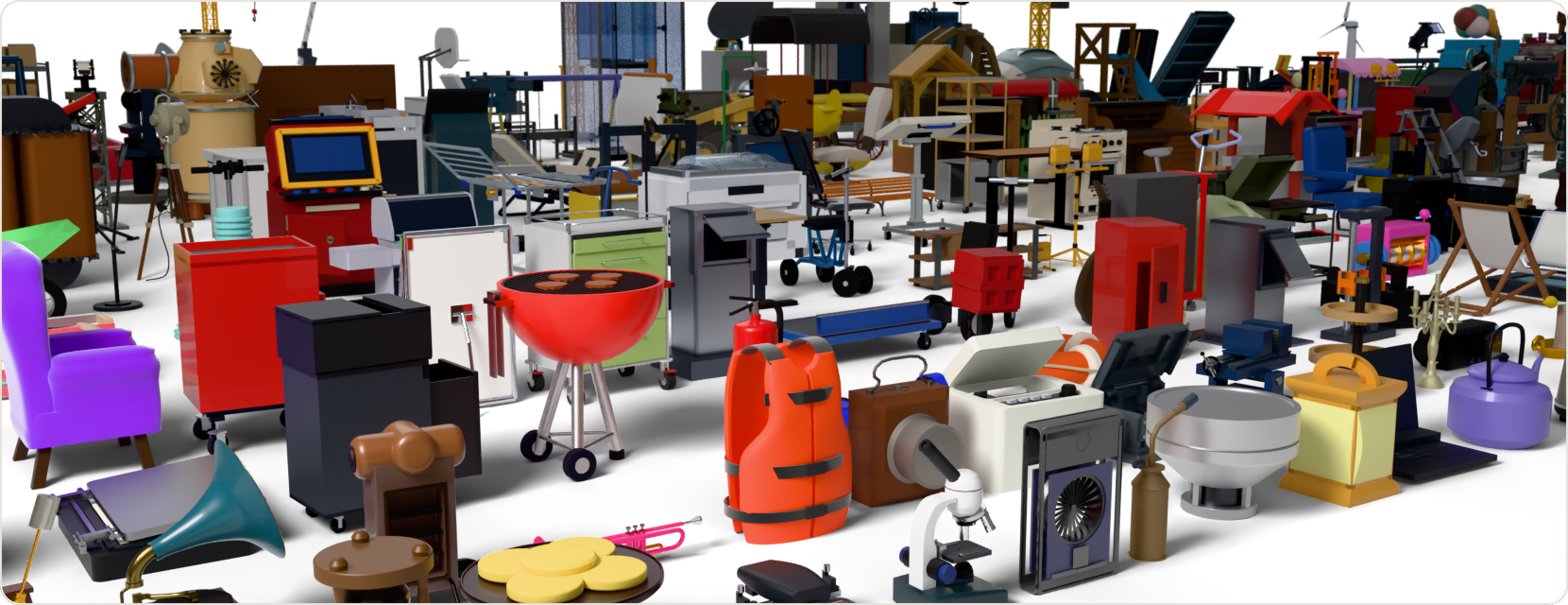

 Datasets ·


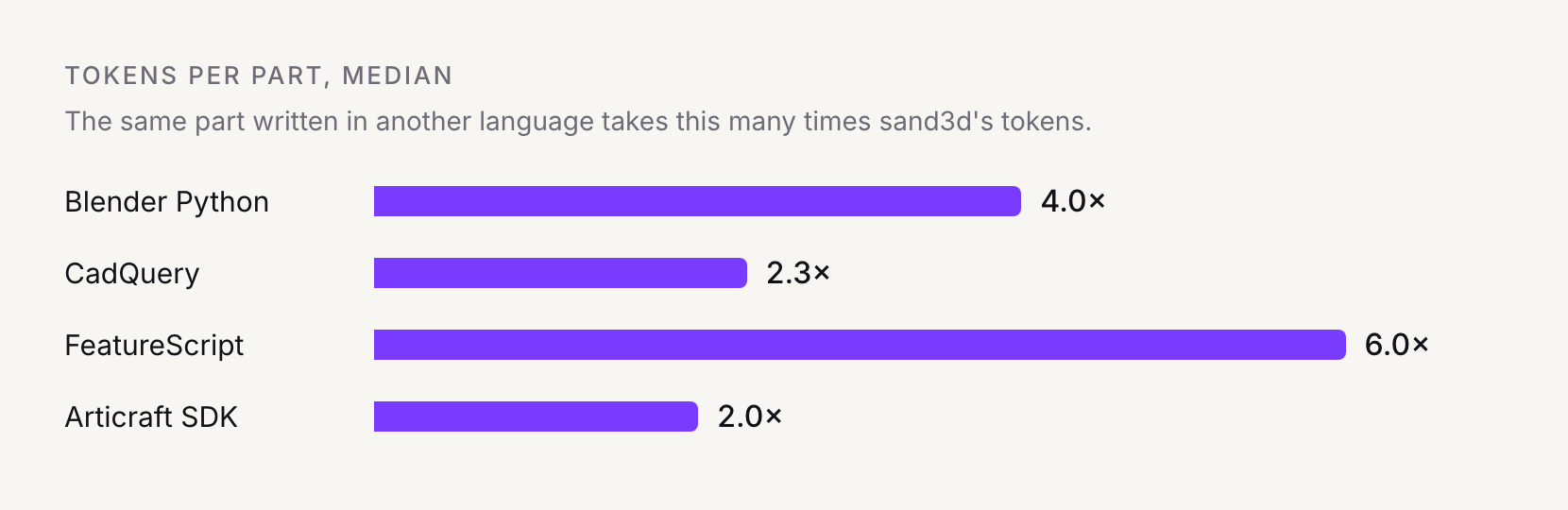
How it is measured, part by part
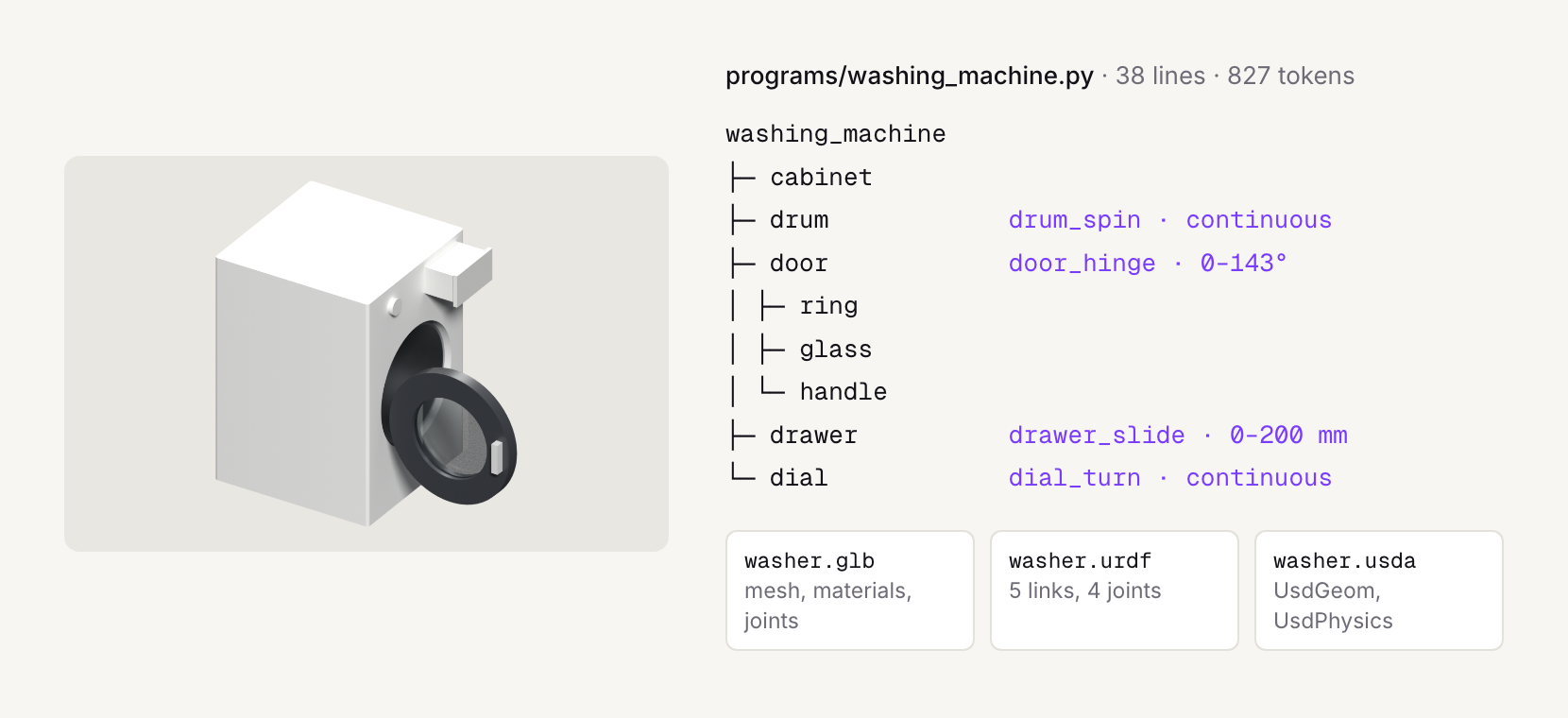
A front-loading washing machine in 38 lines of code (play it and read it): the cabinet, the drum, the door with its glass and handle, the detergent drawer and the dial, each a named part, and four joints that say how they move.
door = s3d.group("door", ring, glass, handle)                      # the handle and the glass move with it
s3d.joint("door_hinge", door, hinge, axis="-Z", range=(0, 143))
s3d.joint("drum_spin", drum, front.move(0, 400), kind="continuous")
s3d.joint("drawer_slide", drawer, top_band.move(150), kind="prismatic", axis="+X", range=(0, 200))
s3d.joint("dial_turn", dial, top_band.move(-150), kind="continuous")
return s3d.assembly("washing_machine", cab, drum, door, drawer, dial, front=front)
One call; the file's extension names the format; lengths in metres.
s3d.export(machine, "washer.glb") # or .urdf, .usda, .obj, .stl
| format | what it carries | for | |---|---|---| | GLB | meshes, materials, the joints in each node's extras, at the current pose | the web, viewers, game engines | | URDF | a link per moving part, its joints and their limits, at rest; OBJ meshes beside it | ROS, PyBullet, MuJoCo, Isaac | | USDA | the same tree in OpenUSD (UsdGeom, UsdPhysics), with the materials | Omniverse, Isaac Sim, USD pipelines | | OBJ, STL | the meshes alone, at the current pose: OBJ Y up, binary STL Z up | any 3D tool, slicers |
.usd, .usdc and .usdz come from the .usda through USD's own tools (usdcat,
usdzip). The scene is also an ordinary Blender scene, for anything else Blender writes.
Python 3.13 (recommended) or 3.11. Blender comes with it, as the bpy module: 5.2 LTS on
Python 3.13, 4.5 LTS on Python 3.11; CI runs bpy 5.2.
pip install sand3d # or, in a uv project: uv add sand3d
bpy has no wheel for Python 3.12, nor for Intel Macs from 5.2 on: there, use Python 3.11.
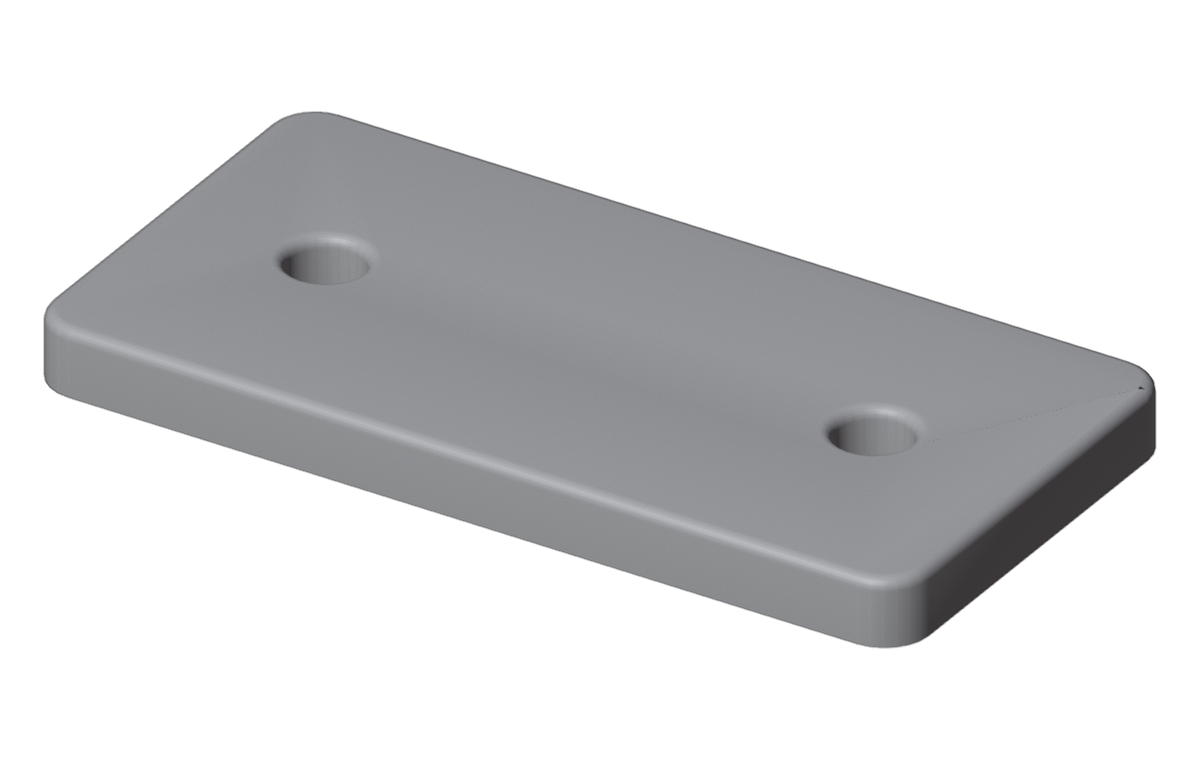
import sand3d as s3d
def bracket(w=80, d=40, t=6, hole_d=6.6, pitch=50):
    plate = s3d.extrude("plate", s3d.rect(w, d, r=4), t)
    s3d.hole(plate, hole_d, on=s3d.grid(2, 1, pitch, 0))
    s3d.fillet(plate, 1, edges="top")
    return plate
s3d.export(bracket(), "bracket.glb")
Millimetres by default. Every verb with code that runs and its render: the quickstart; objects to play joint by joint: the gallery; every signature: the API. The programs themselves: docs/examples/ and programs/.
Put docs/api.md in the system prompt: the rules of the vocabulary, every signature, and worked examples, in about 3 600 tokens; llms.txt points a model at it. For objects of several parts, the guidelines give the eight rules of an assembly program: the plan first, then the details, then the parts.
Everything on one flat s3d. surface:
| family | verbs |
|---|---|
| profiles | rect circle slot polygon poly arc spline superellipse text offset stroke … (16) |
| solids and paths | extrude revolve sweep loft wire helix box cylinder tube sphere torus dome … (15) |
| edits | cut join intersect split hole pocket fillet chamfer shell dent … (15) |
| frames and placement | Frame face edge bbox local at transform grid ring along snap |
| articulation | joint pose seat |
| assembly | group assembly attach export units fingerprint … (8) |
| parts and materials | gear knurl thread material |
No category verbs (chair(), table()): a category is a program written in sand3d.
sand3d programs for five sources of 3D objects, on Hugging Face under CC BY 4.0.
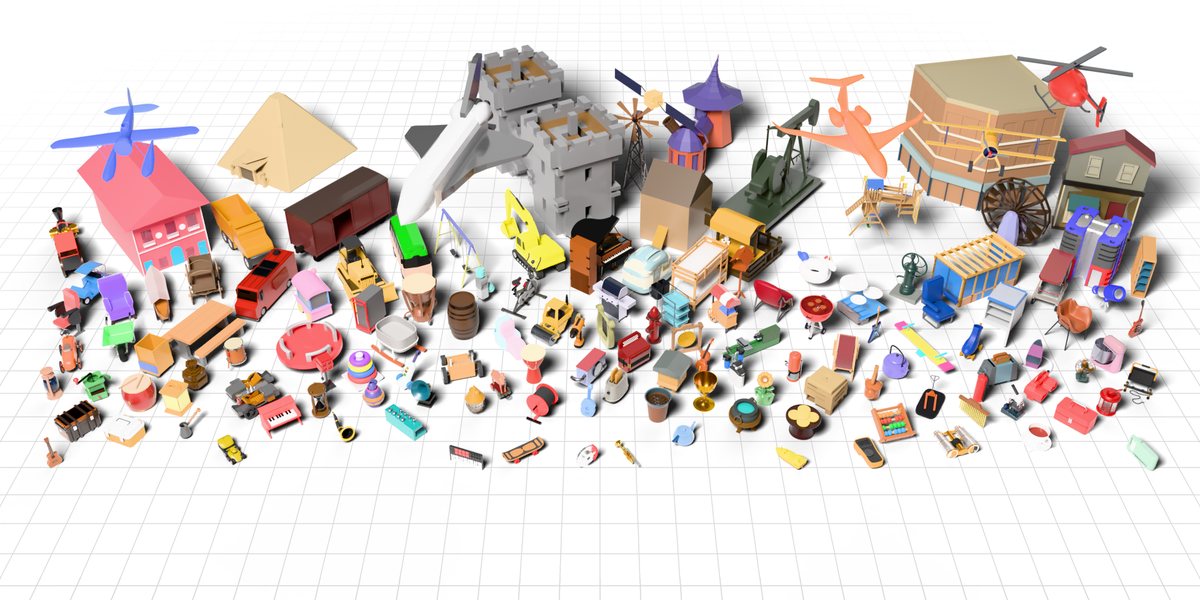 sand3d-objaverse · Objaverse Everyday objects from Objaverse, each rebuilt as a program. |
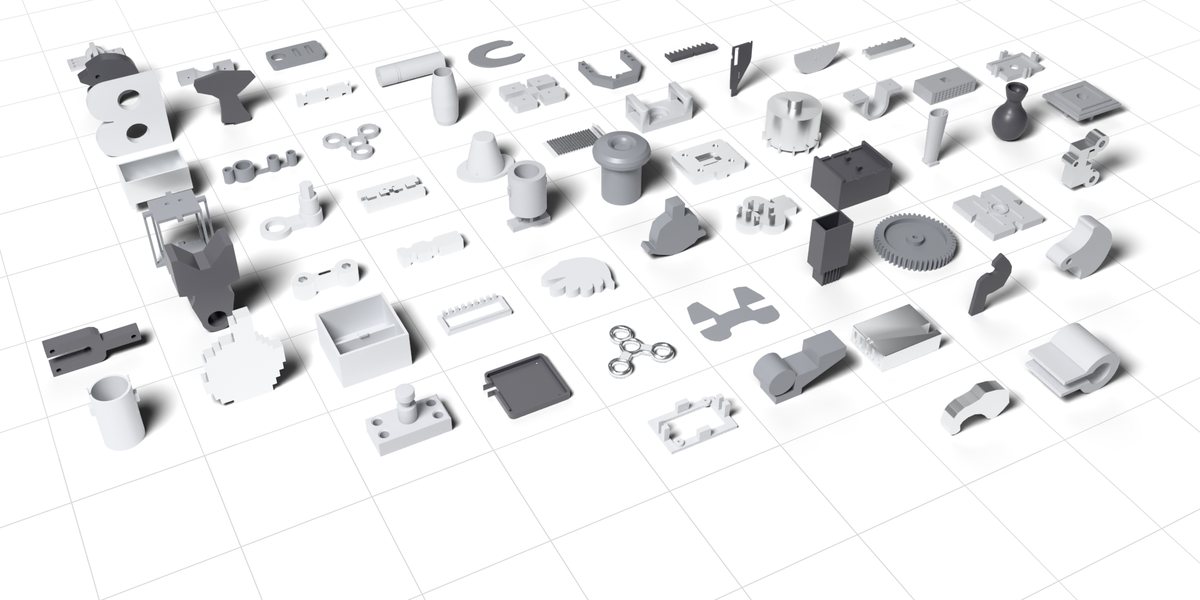 sand3d-cad · CAD Mechanical parts from public CAD models. |
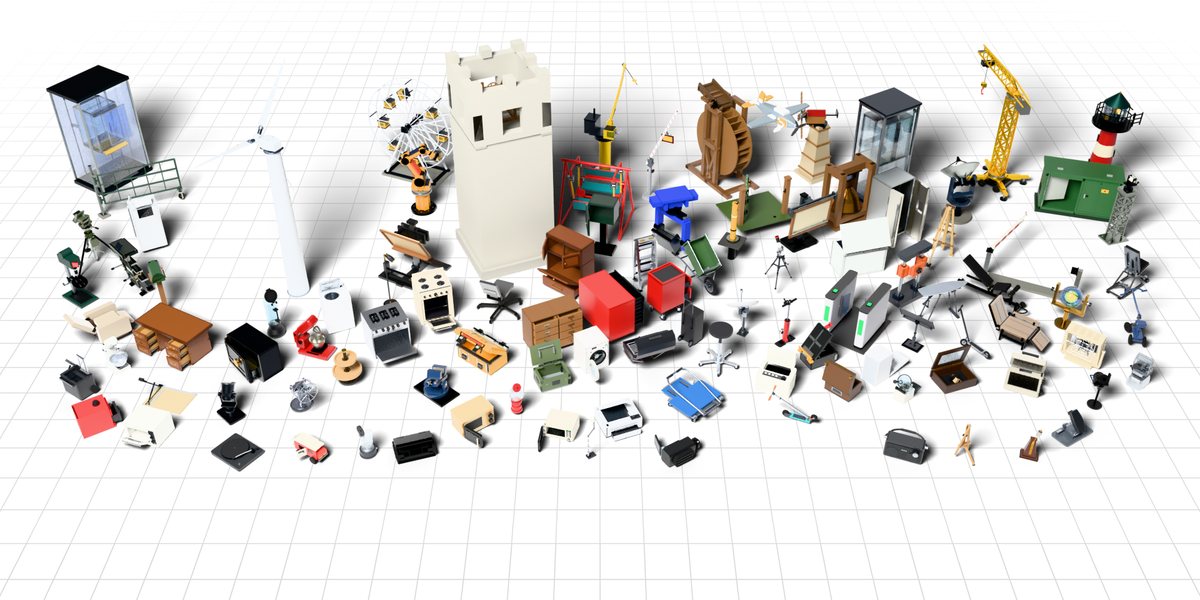 sand3d-articraft · Articraft Articulated objects from Articraft, their joints declared. |
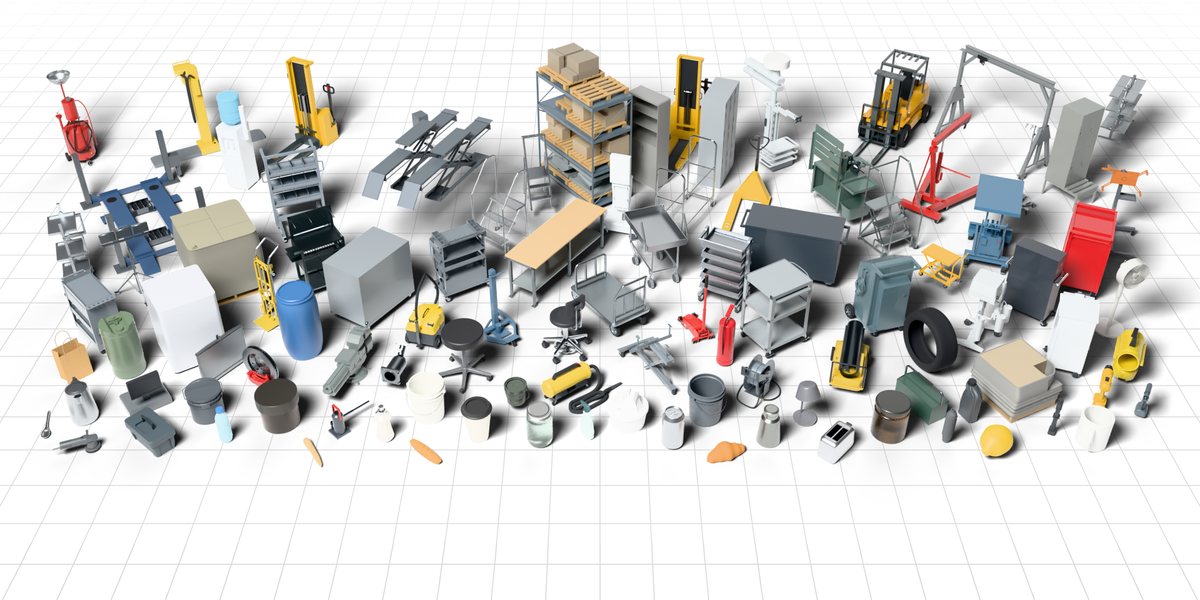 sand3d-simready · SimReady Simulation-ready assets from NVIDIA SimReady. |
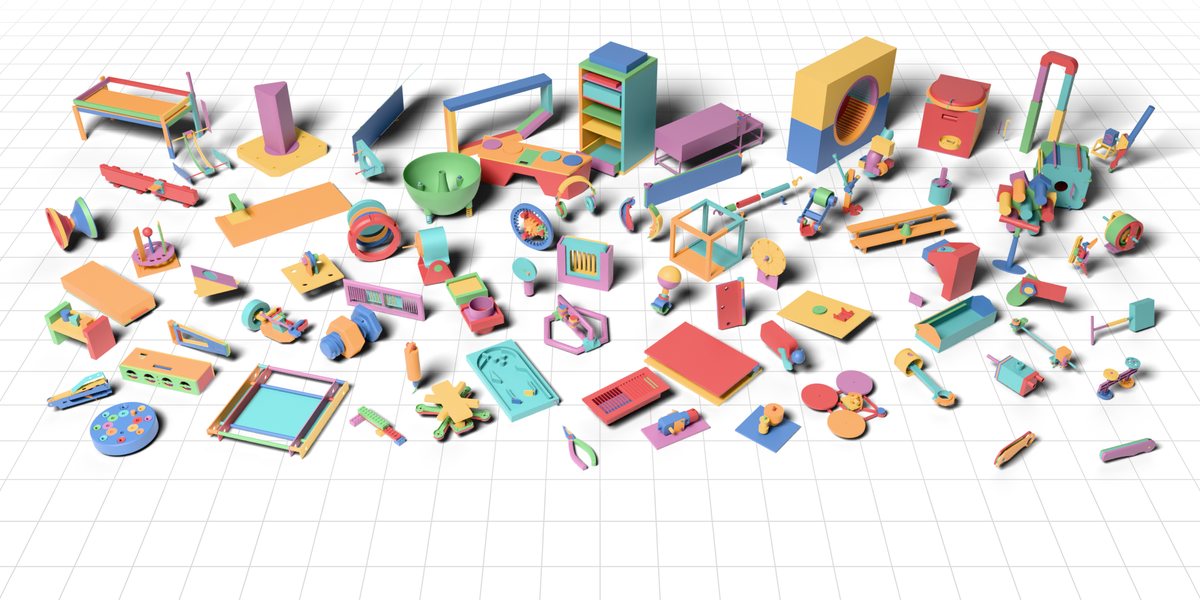 sand3d-automate · AutoMate Mechanical assemblies from AutoMate, each part a function of its program. |
Browse them in the explorer, or all five in the collection.
If you use sand3d in your work, please cite it. CITATION.cff holds the same, and GitHub
shows it as "Cite this repository".
@misc{sand3d2026,
  author = {Neveu, Thibault and Loy, Andr{\'e}a},
  title  = {sand3d},
  year   = {2026},
  note   = {Version 1.6.3},
  url    = {https://github.com/Sandflow-ai/sand3d}
}
How the library is built, tested and versioned: CONTRIBUTING.md. Apache License 2.0: see LICENSE.
→ →
 →
 →
 →
 →
 →
 →