1
 →
→
[WWW'2024] "PromptMM: Multi-Modal Knowledge Distillation for Recommendation with Prompt-Tuning"
HKUDS/PromptMM is an open-source project on GitHub, mainly written in Python. [WWW'2024] "PromptMM: Multi-Modal Knowledge Distillation for Recommendation with Prompt-Tuning" It currently holds 51 stars and 3 forks with 0 open issues, and was last pushed on an unknown date (repository created unknown).
AI Homed tracks it on the AI Prompt Engineering board.
PyTorch implementation for WWW 2023 paper PromptMM: Multi-Modal Knowledge Distillation for Recommendation with Prompt-Tuning.
Wei Wei, Jiabin Tang, Yangqin Jiang, Lianghao Xia and Chao Huang*. (*Correspondence)
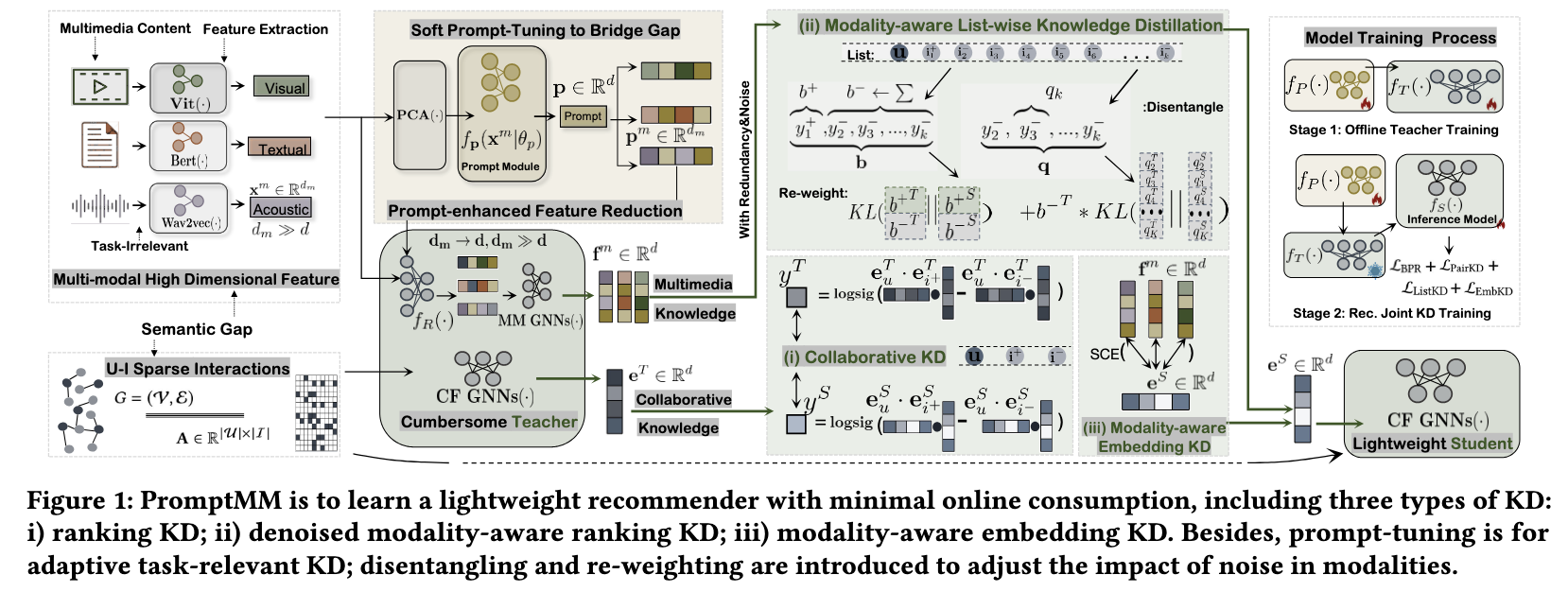
Start training and inference as:
python ./main.py --dataset {DATASET}
Amazon-Electronics, Netflix, Tiktok
  ├─ MMSSL/
      ├── data/
        ├── tiktok/
        ...
2024.2.27 new multi-modal datastes uploaded: 📢📢 🌹🌹 We provide new multi-modal datasets Netflix and MovieLens (i.e., CF training data, multi-modal data including item text and posters) of new multi-modal work LLMRec on Google Drive. 🌹We hope to contribute to our community and facilitate your research~2023.2.27 update(all datasets uploaded): We provide the processed data at Google Drive. # part of data preprocessing
#----json2mat--------------------------------------------------------------------------------------------------
import json
from scipy.sparse import csr_matrix
import pickle
import numpy as np
n_user, n_item = 39387, 23033
f = open('/home/weiw/Code/MM/MMSSL/data/clothing/train.json', 'r')
train = json.load(f)
row, col = [], []
for index, value in enumerate(train.keys()):
for i in range(len(train[value])):
row.append(int(value))
col.append(train[value][i])
data = np.ones(len(row))
train_mat = csr_matrix((data, (row, col)), shape=(n_user, n_item))
pickle.dump(train_mat, open('./train_mat', 'wb'))
# ----json2mat--------------------------------------------------------------------------------------------------
----mat2json--------------------------------------------------------------------------------------------------
train_mat = pickle.load(open('./train_mat', 'rb'))
test_mat = pickle.load(open('./test_mat', 'rb'))
val_mat = pickle.load(open('./val_mat', 'rb'))
total_mat = train_mat + test_mat + val_mat
total_mat =test_mat
total_mat = pickle.load(open('./new_mat','rb'))
total_mat = pickle.load(open('./new_mat','rb'))
total_array = total_mat.toarray()
total_dict = {}
for i in range(total_array.shape[0]):
total_dict[str(i)] = [index for index, value in enumerate(total_array[i]) if value!=0]
new_total_dict = {}
for i in range(len(total_dict)):
# if len(total_dict[str(i)])>1:
new_total_dict[str(i)]=total_dict[str(i)]
train_dict, test_dict = {}, {}
for i in range(len(new_total_dict)):
train_dict[str(i)] = total_dict[str(i)][:-1]
test_dict[str(i)] = [total_dict[str(i)][-1]]
train_json_str = json.dumps(train_dict)
test_json_str = json.dumps(new_total_dict)
with open('./new_train.json', 'w') as json_file:
# with open('./new_train_json', 'w') as json_file:
json_file.write(train_json_str)
with open('./test.json', 'w') as test_file:
with open('./new_test_json', 'w') as test_file:
test_file.write(test_json_str)
----mat2json--------------------------------------------------------------------------------------------------
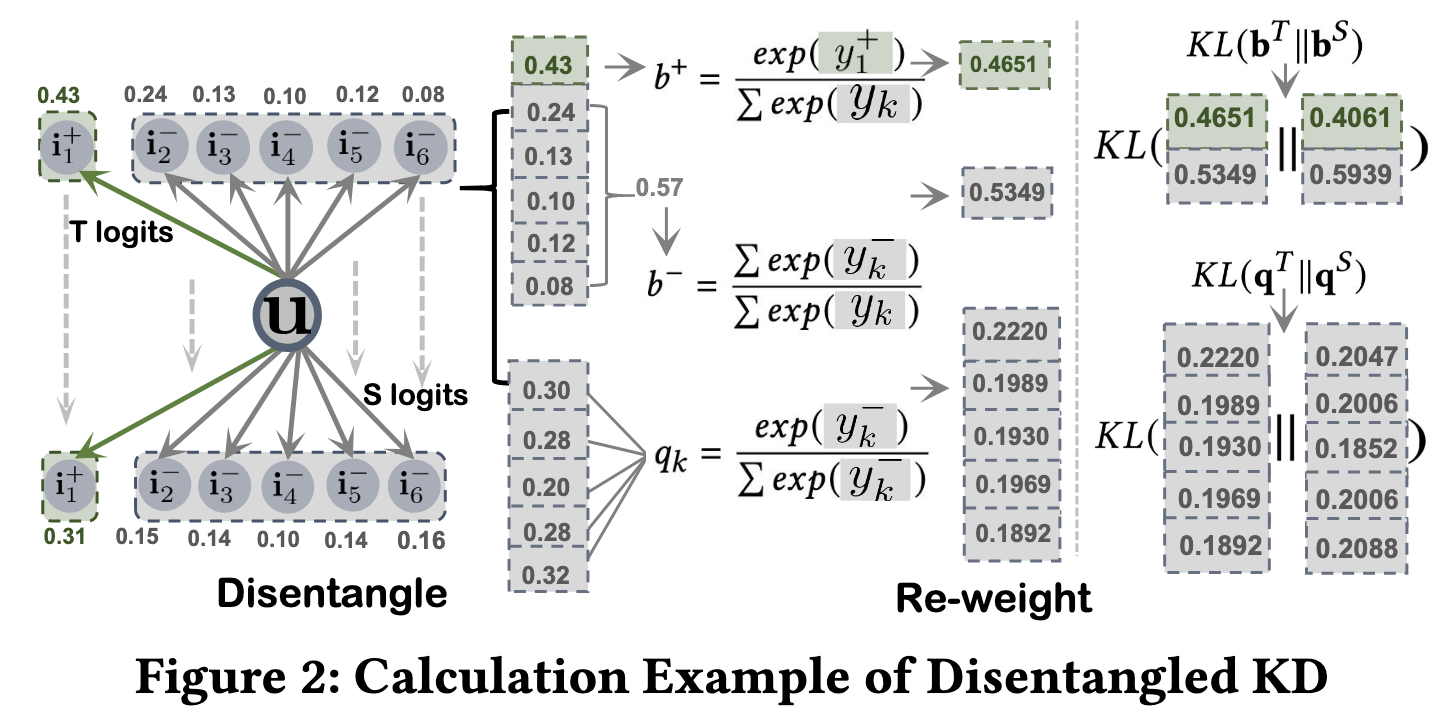
The structure of this code is largely based on LATTICE, MICRO. Thank them for their work.
→ →
→ →
→ →
→ →
→ →
→ →
→ →
→