1
 →
→
Remote notifications for the Pi coding agent — Pushover, ntfy, and webhooks when tasks finish or need your input.
Asigers/pi-knock is an open-source project on GitHub, mainly written in TypeScript. Remote notifications for the Pi coding agent — Pushover, ntfy, and webhooks when tasks finish or need your input. It currently holds 113 stars and 8 forks with 0 open issues, and was last pushed on an unknown date (repository created unknown).
AI Homed tracks it on the Today's Trending board, currently at rank #83 with 0 new stars today.

English | 简体中文
Leave the terminal. Pi will knock when it needs you.
pi-knock is a Pi coding agent extension that sends remote notifications when a task finishes, fails, or needs your input. Use Pushover for iPhone / Apple Watch, ntfy for hosted or self-hosted push, or a webhook for your own automation.
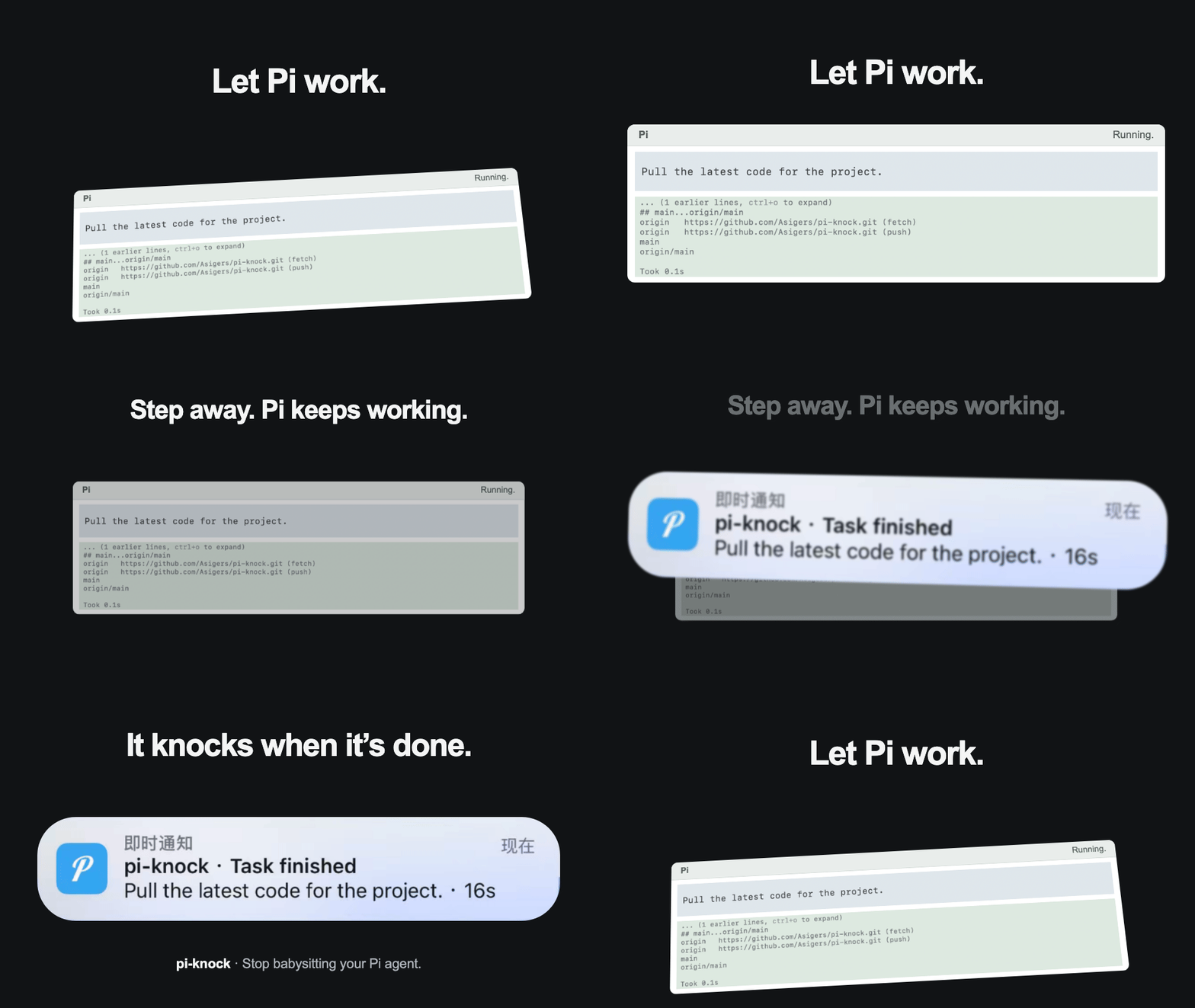
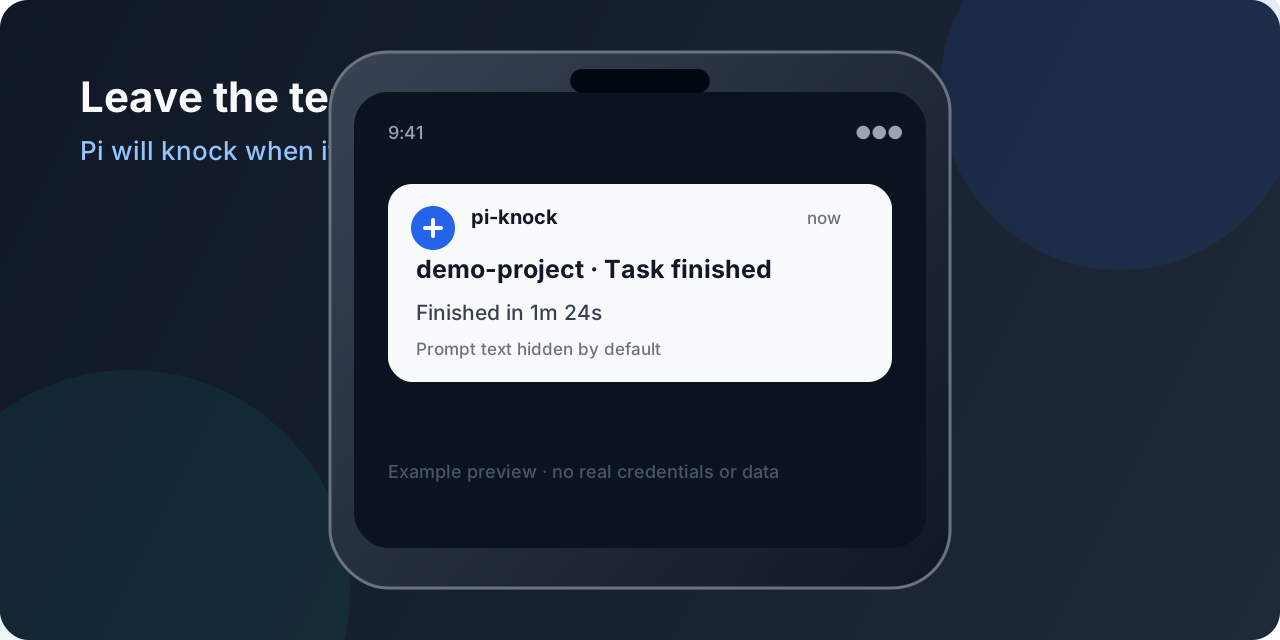
Desktop notifications only help when you're near your computer. pi-knock lets you hand work to Pi and walk away: it sends the important moments to your phone or watch.
agent_settled, after Pi has finished automatic retries and queued work.Requirements: Pi 0.87+ and Node.js 22.19+.
The recommended installation is npm:
pi install npm:@asigers/pi-knock
Choose one installation source. Do not install both npm and Git versions at the same time, or Pi may load the extension twice and send duplicate notifications.
For development or unreleased source only, use the tagged Git version instead:
pi install git:github.com/Asigers/pi-knock@v0.3.2
If you are unsure which copy is installed, run pi list and keep only one pi-knock entry.
Restart Pi or run /reload, then launch the setup wizard:
/knock setup
Choose a provider and enter the required settings. Saving a provider configuration immediately sends a test notification.
Credential privacy: Pi's standard input is not masked. Enter credentials only in a private terminal or session.
Send another test notification whenever you need to check delivery:
/knock test
If it does not arrive, run /knock doctor to inspect the provider configuration and last delivery result.
Run these commands inside Pi:
| Command | Description |
| --- | --- |
| /knock setup | Configure providers and notification preferences |
| /knock status | Show current configuration |
| /knock test | Send a live test notification |
| /knock doctor | Show provider and last-delivery diagnostics |
| Provider | Best for | | --- | --- | | Pushover | iPhone / Apple Watch | | ntfy | Hosted or self-hosted push | | Webhook | Custom integrations and automation |
For provider setup details, see the English provider guide or the Pushover setup guide (简体中文).
Default behavior:
| Event | Notify | | --- | --- | | Conversation completed | Yes | | Input / confirmation required | Yes | | Conversation failed | Yes | | Conversation aborted | No |
Notifications use the project name and, when available, the Pi session name. By default prompt text is not included on the lock screen.
To change this, run /knock setup and choose Notification preferences.
Delivery uses up to three attempts (the initial request plus two retries) for timeouts, transient network errors, and retryable provider responses such as HTTP 429 / 5xx. Permanent 4xx errors fail immediately.
Pushover allows 10 seconds per request, with 5-second and 10-second backoff before retries. ntfy and webhook requests keep their 5-second timeouts and 1-second / 3-second backoff. Delays include a small jitter, and providers' Retry-After response is honored up to 60 seconds.
Delivery failures are silent: automatic notifications and tests from /knock test or setup do not display failure warnings or print errors. Test feedback only lists successful channels. Lifecycle notifications run in the background and do not hold Pi's settled boundary open while retries run. Use /knock doctor when you want to inspect failures and attempt counts. The last report is stored locally without notification content or credentials.
A timed-out request may already have been accepted by the provider, so retries can occasionally produce duplicate notifications.
The setup wizard writes two files by default:
~/.pi/agent/pi-knock/
├── config.json
├── credentials.json
└── last-delivery.json
config.json stores notification preferences and non-secret provider settings.credentials.json stores provider keys and tokens separately. Do not commit it or share its contents.last-delivery.json stores the latest redacted delivery status and attempt count for /knock doctor.PI_KNOCK_HOME to change the default directory, or use PI_KNOCK_CONFIG and PI_KNOCK_CREDENTIALS to override individual file paths.
A minimal config.json with Pushover enabled (credentials are configured separately):
{
  "projectName": "",
  "openUrl": "",
  "contentMode": "project-only",
  "notify": {
    "completed": true,
    "error": true,
    "aborted": false,
    "input": true
  },
  "pushover": {
    "enabled": true
  }
}
See pi-knock.example.json and config.schema.json for the complete configuration.
Environment variables override file settings and are useful for Pi-Web, containers, CI, and external secret managers. Common variables include:
| Purpose | Variables |
| --- | --- |
| Pushover credentials | PI_KNOCK_PUSHOVER_USER_KEY, PI_KNOCK_PUSHOVER_APP_TOKEN |
| ntfy connection | PI_KNOCK_NTFY_SERVER, PI_KNOCK_NTFY_TOPIC, PI_KNOCK_NTFY_ACCESS_TOKEN |
| Webhook connection | PI_KNOCK_WEBHOOK_URL, PI_KNOCK_WEBHOOK_BEARER |
| Delivery report path | PI_KNOCK_DELIVERY_REPORT (optional) |
| Notification content | PI_KNOCK_CONTENT_MODE (project-only or prompt) |
Update installed extensions:
pi update --extensions
Remove the npm installation:
pi remove npm:@asigers/pi-knock
For a GitHub installation, use pi remove git:github.com/Asigers/pi-knock instead.
npm ci --ignore-scripts
npm run check
npm pack --dry-run
pi -ne -e ./src/index.ts
Using -ne prevents another installed copy of pi-knock from loading during local testing.
→ →
→ →
→ →
→ →
→ →
→ →
→ →
→