1
 →
→
Turn one topic into a finished Vox-style paper-collage explainer/ad video — automated end to end on Atlas Cloud + ffmpeg. An agent skill.
Alisa0808/vox-director is an open-source project on GitHub, mainly written in Python. Turn one topic into a finished Vox-style paper-collage explainer/ad video — automated end to end on Atlas Cloud + ffmpeg. An agent skill. It currently holds 1,920 stars and 0 forks with 0 open issues, and was last pushed on an unknown date (repository created unknown).
AI Homed tracks it on the AI Video Projects board and on the AI AI Video Projects list.
English · 简体中文
Turn one topic into a finished Vox-style paper-collage explainer / ad video — script, collage keyframes, motion, voice-over, music and captions, all automated.
An agent skill that runs end to end on the Atlas Cloud API + local ffmpeg, usable by any coding agent (Claude Code, Codex, etc.). You give it a one-line topic; it gives you an mp4.



https://github.com/user-attachments/assets/ed08d230-7bcb-4b48-a17d-23c079208f9f
▶ "The evolution of Chinese civilization" · 30s
 |
 |
 |
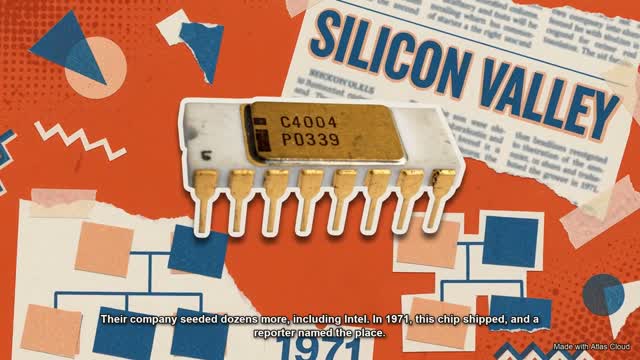 |
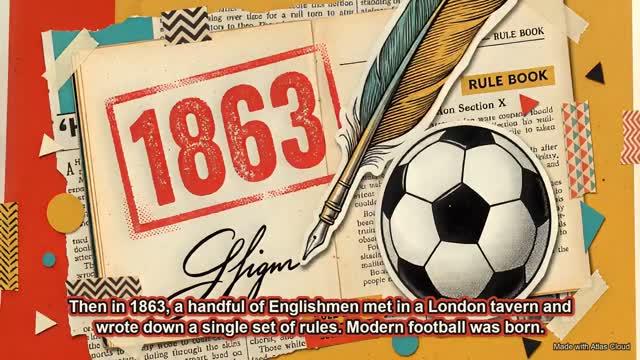
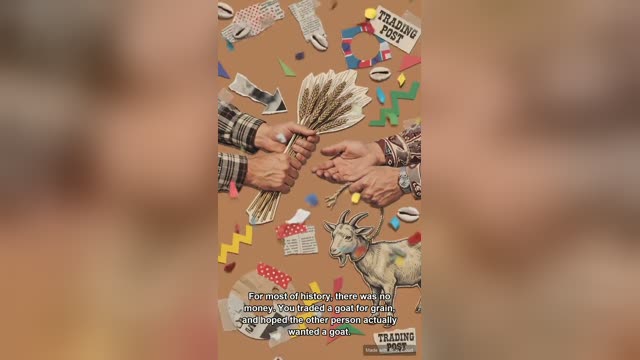
| Football history · 60s | Mexican street food · 60s | A brief history of money · 60s | Silicon Valley history · 60s |
▶ more films — click any thumbnail to play
---
The look is the modern editorial paper-collage popularized by Vox explainers: hand-cut paper cut-outs, torn edges, tape, halftone dots, newspaper clippings, bold flat color per beat, big cut-out headlines — brought to life with motion, a narrator, music and captions.
One topic flows through one script per stage, all driven by a single beats.json per project:
topic
  │
  ├─ 1. beat map        pick a narrative arc → write beats.json      ◀── GATE 1: you approve the beat map
  ├─ 2. style bake-off  render the same beat in 3–4 themes           ◀── GATE 2: you pick the look by eye
  ├─ 3. keyframes       one collage poster per beat  (nano-banana-2)
  ├─ 4. motion          animate each poster          (gemini-omni-flash i2v)
  ├─ 5. voice + music   one narrator (xai/tts) + BGM (minimax/music)
  ├─ 6. assemble        ffmpeg: concat, duck music under VO, burn captions + watermark
  └─ final.mp4
That flow is B-roll — a topic in, everything generated. Two more input modalities reuse the same engine:
gemini-omni-flash/video-edit, auto-retrying on seedance-2.0/reference-to-video).nano-banana-2/edit). The narration can be cloned into the subject's own voice.1. The look is born in the image step. Each beat is a finished collage poster. All the collage DNA (torn paper, cut-outs, halftone, headline text) lives in that image — if the poster isn't a rich collage, nothing downstream saves it. 2. The motion is added after. By default an AI video model animates the whole poster (the "living poster" path). For dramatic piece-by-piece assembly, an optional local keyframe engine cuts the poster into parts and drives them frame-by-frame (no content filters, pixel-exact — great for real people).
Two human decision gates keep you in control (approve the beat map; pick the style); everything else is automated.
| Job | Model |
|---|---|
| Keyframe / collage poster | google/nano-banana-2/text-to-image |
| Animate (non-real content) | google/gemini-omni-flash/image-to-video |
| Animate (real people / brands) | kwaivgi/kling-video-o3-pro/image-to-video |
| Re-style a talking-head (A-roll) | google/gemini-omni-flash/video-edit |
| Anchor a photo in the collage (C-roll) | google/nano-banana-2/edit |
| Narration | xai/tts-v1 |
| Narration in a real person's voice | bytedance/seed-audio-1.0 (voice cloning) |
| Music | minimax/music-2.6 |
| Cut out an element (advanced path) | youchuan/v8.1/remove-background |
Model IDs drift — the skill fetches the live list from GET https://api.atlascloud.ai/api/v1/models before running.
This is an agent skill — it works with any coding agent that can read a workflow and run scripts (Claude Code, Codex, …). Claude Code auto-discovers it as a skill; other agents read AGENTS.md → SKILL.md.
Option A — from this repo:
git clone https://github.com/Alisa0808/vox-director.git ~/.claude/skills/vox-director
Option B — from the packaged skill: download vox-director.skill and install it via your Claude skills UI.
Then set your Atlas Cloud API key (get one at atlascloud.ai/console/api-keys):
export ATLASCLOUD_API_KEY="sk-..."
Just ask your coding agent, with the skill installed:
"Make me a Vox-style collage video introducing Mexican street food — English, 16:9, 15 seconds."
The agent will draft a beat map for your approval, run a style bake-off for you to pick from, then generate keyframes → motion → voice → music and assemble out//final.mp4.
brew install ffmpeg)pip install pillow) — for caption/watermark overlaysSKILL.md the skill (English) — the workflow the agent follows
SKILL.zh.md the same skill in Chinese
AGENTS.md entry point for non-Claude agents (Codex, …)
references/ the creative engine
prompt-guide.md the LOOK layer — prompt structures, vocab & 9 theme presets
beat-layer.md 14 narrative arcs + hook/pacing + shot patterns
voices.md xai/tts voice roster — pick a voice_id per language/tone
models-and-gotchas.md every API / ffmpeg gotcha, already solved
local-engine.md the advanced element-level motion engine
scripts/ one script per pipeline stage
examples/ ready-to-run beats.json examples
assets/ the showcase film
Built by @alisaqqt — follow for more agent-skill experiments.
Inspired by the collage-ad workflows of Stav Zilber, rom1trs and Higgsfield, and by Vox's explainer visual language.
Built end to end on Atlas Cloud — one prompt, one film.
MIT © 2026 Alisa Qian
→ →
→ →
→ →
→ →
→ →
→ →
→ →
→