Google Pics: Canva Meets a Prompt Bar, and Design Moves to Autocomplete
On September 1, 2026, Google took its most direct swing yet at the creative software market dominated by Canva and Adobe — and it did not bring a souped-up editor. It brought a product called Google Pics, an AI-first design tool where you describe what you want and the software makes it for you. Powered by Google's image-generation model family known as Nano Banana, Pics is being embedded directly into Google Workspace — arriving first in Docs and Slides, with Google Drive on the way in the coming weeks — and rolling out to most Workspace customers as well as subscribers to Google AI Pro or Ultra.
Whether you are a marketer cranking out social posts or a startup founder who needs a credible one-pager by lunch, Pics is a strong signal that the future of "design" is increasingly a conversation rather than a canvas. But the arrival of an AI-heavy rival also raises a familiar set of questions about artists, originality, and where human designers fit in a world of prompt-to-download graphics.
What Google Pics Actually Does
At its core, Pics is aimed at the everyday design tasks that show up in almost any job — a poster for a team offsite, a set of social media images, an illustration for a slide deck. Rather than starting from a blank document or a template library, you start with a prompt. Type something like "a bold poster for our September product launch, warm oranges, modern type," and Pics generates options you can refine.
Google is careful to distinguish Pics from both neighbors. Unlike Canva — where human artists, illustrators, and photographers publish templates and graphics to a marketplace and earn royalties on them — Pics does not have a creator marketplace at all. Its output is generated by AI that was trained on artists' works, which is precisely why copyright questions are swirling around the launch. And unlike Adobe Express, which creators use to actively build and shape an asset, Pics is a place to direct generation rather than craft from scratch. The result is a tool for people who need visuals, not necessarily for people who love making them.
Beyond the Prompt Bar
It would be a mistake to dismiss Pics as nothing more than an image generator tucked into a document editor. The tool includes real editing surface that overlaps with what you would expect from a lightweight designer:
- Object isolation and transformation — select an element in an existing image and move, resize, or restyle it without redoing the whole design.
- Modify or translate text inside images, which is one of the hardest problems in AI image editing and a feature that saves designers hours on localizing visuals.
- Multiple generation batches — Pics produces several variations of a prompt so you can pick the strongest option instead of settling for the first one.
- Collaborative editing tied into the Google Docs and Slides workflows you are already sharing with colleagues.
That last point is the sleeper feature. Because Pics lives inside Workspace, a design is not a file you have to export, email, and version-chase. It is an object your whole team can edit together in real time — an advantage that template-heavy rivals have been slower to match.
Who It Is For, and Who It Isn't
If you are a professional illustrator, a brand designer, or a photographer whose income depends on licensing original work, Google Pics is understandably not good news. The launch re-opens the copyright debate that has trailed generative design since diffusion models went mainstream: AI trained on artists' output producing free, instant art arguably competes with the very people whose work made it possible. Google has framed the tool as serving the "everyday designer" who never had the skills or the budget for professional software — a familiar argument — but it will not quiet the artists who see their craft being commoditized.
"Canva gave non-designers templates. Google is giving them a genie," one creative director wrote this week. "Templates still left the human in charge of taste. A genie asks you to specify taste in a sentence — and a lot of people cannot."
Assessment: Strong at Speed, Thin on Originality
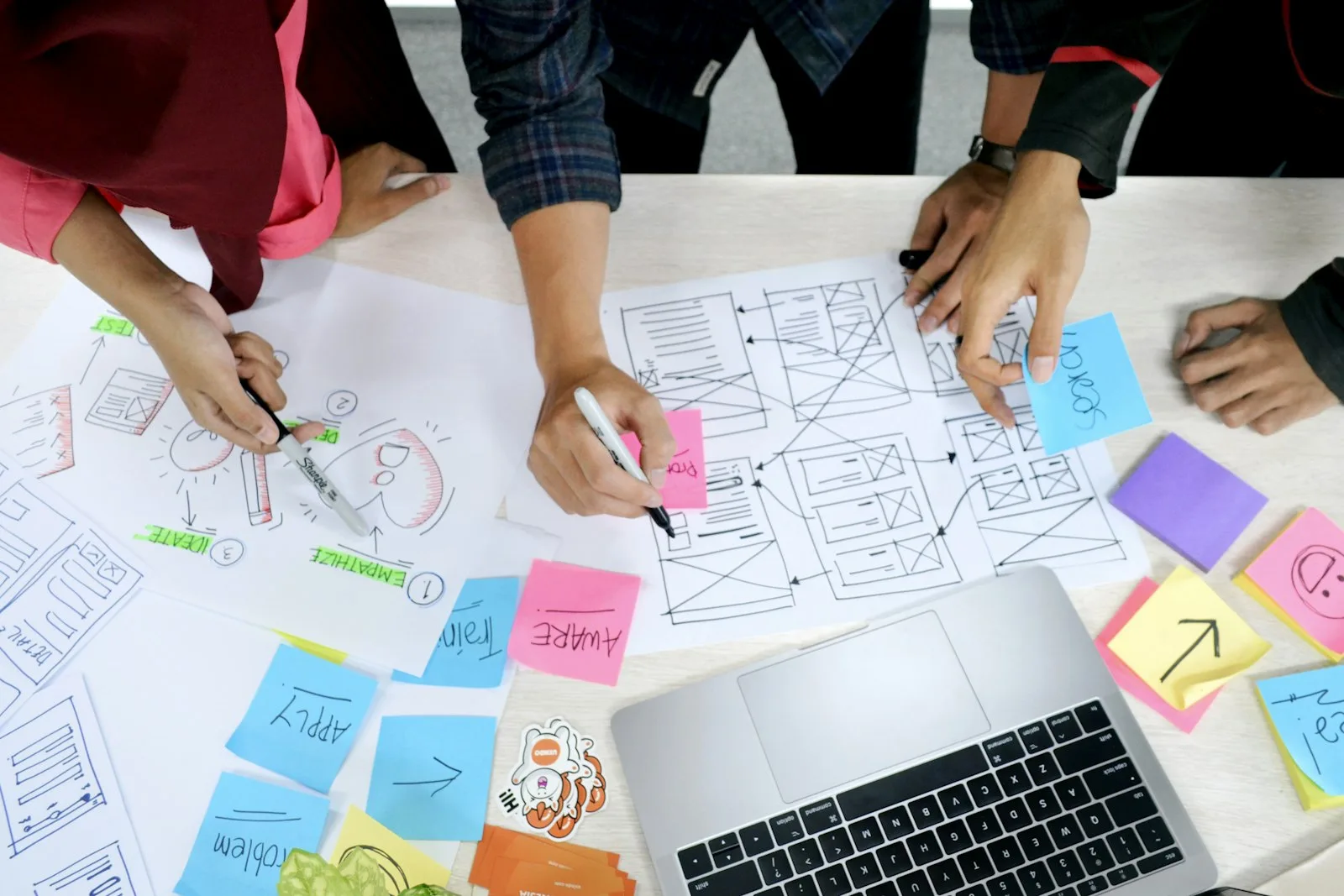
In practice, Pics will likely excel at the broad, fast, "good enough" end of design: grabbing a credible hero image for a landing page, mocking up a campaign visual in seconds, or unifying a slide deck with on-brand-looking illustrations. For anything requiring precise, deliberate, original design — a distinctive logo mark, a complex infographic with real data, a layout that must survive brand-approval review — it will probably land closer to a starting point than a finished product. That makes it a genuinely useful pairing with a human designer: the AI generates the raw material at scale, and the human applies the judgment that turns raw material into work people remember.
The pricing signals Google's ambitions clearly. Pics ships to most Workspace customers and to Google AI Pro and Ultra subscribers, meaning it arrives bundled rather than as a separate line item. That tilts the price-performance equation hard in Google's favor versus Canva's subscription-plus-marketplace model, and it is the clearest sign yet that Google believes the margins in creative software will increasingly belong to whoever owns the model and the distribution.
There is also the question of whether prompt-generated graphics can carry a consistent brand identity. A logo that a model invents in one session will not reproduce itself exactly in the next, which matters far more for a company identity than for a throwaway social post. Teams that use Pics will quickly learn to treat its output as inspiration and raw material rather than a finished brand asset — pairing the generator with a shared brand kit, a human designer who sets the rules, and a careful eye on consistency across every prompt.
The Road Ahead
Google Pics is not going to make Canva and Adobe disappear overnight; established tools have huge template libraries, deep workflows, and loyal power users. But it marks a genuine inflection point: the biggest productivity incumbent in the world has decided that the default way to make graphics is to prompt for them. For everyday design, that may well be true. The open questions — how artists are compensated, how original the output can truly be, and whether prompt-driven design scales to branding that survives scrutiny — will shape the creative software market for the rest of 2026.