AI and the Future of Software Development
For decades, the craft of software development rested on a stable assumption: writing code is the hard, irreplaceable part of the job, and everything else exists to support it. That assumption is wobbling. In 2026, AI assistants routinely draft functions, explain unfamiliar codebases, generate tests, and suggest fixes before a developer has touched the keyboard. The tools are no longer curiosities—they are entrenched in daily workflows, and they are quietly rewriting what "software developer" means. This is not a story about robots replacing programmers tomorrow. It is a story about a profession renegotiating its core activities in real time, and doing so with more speed than most anticipated even a year ago.
From Autocomplete to Co-author
The earliest coding AI was autocomplete: a model that predicted the next few tokens as you typed. That was useful but shallow. The current generation operates at a different altitude entirely. Modern assistants understand an entire repository, not just the buffer in front of you. They can trace how a function is used across dozens of files, respect the project's established conventions, and generate coherent multi-file changes. They can also operate as background utility players—opening a pull request to fix a flaky test, migrating a deprecated API call, or refactoring a module to reduce duplication.
The practical effect is a rebalancing of effort. The share of a developer's day spent on mechanical chores—typing boilerplate, hunting for a missing import, formatting code to match house style—has collapsed. The share spent on genuinely hard problems is growing. Developers who use these tools well describe the work as shifting from production to direction and review: they specify intent, delegate implementation, and spend their energy on the parts that require taste, judgment, and context that the model does not possess.

How the Workflow Has Changed
Observing a mature AI-assisted team today shows a very different rhythm than the era of one-hundred-line commits. The new pipeline tends to look like this:
- Synthesis. The developer states the requirement and constraints in natural language or a structured issue, letting the model propose an approach.
- Drafting. The model produces an initial implementation across the relevant files, matching existing patterns in the repository.
- Verification. The developer—or another agent—writes and runs tests, checks types, and reviews the diff for correctness and style.
- Iteration. Feedback loops tighten; the model revises based on test failures and review comments.
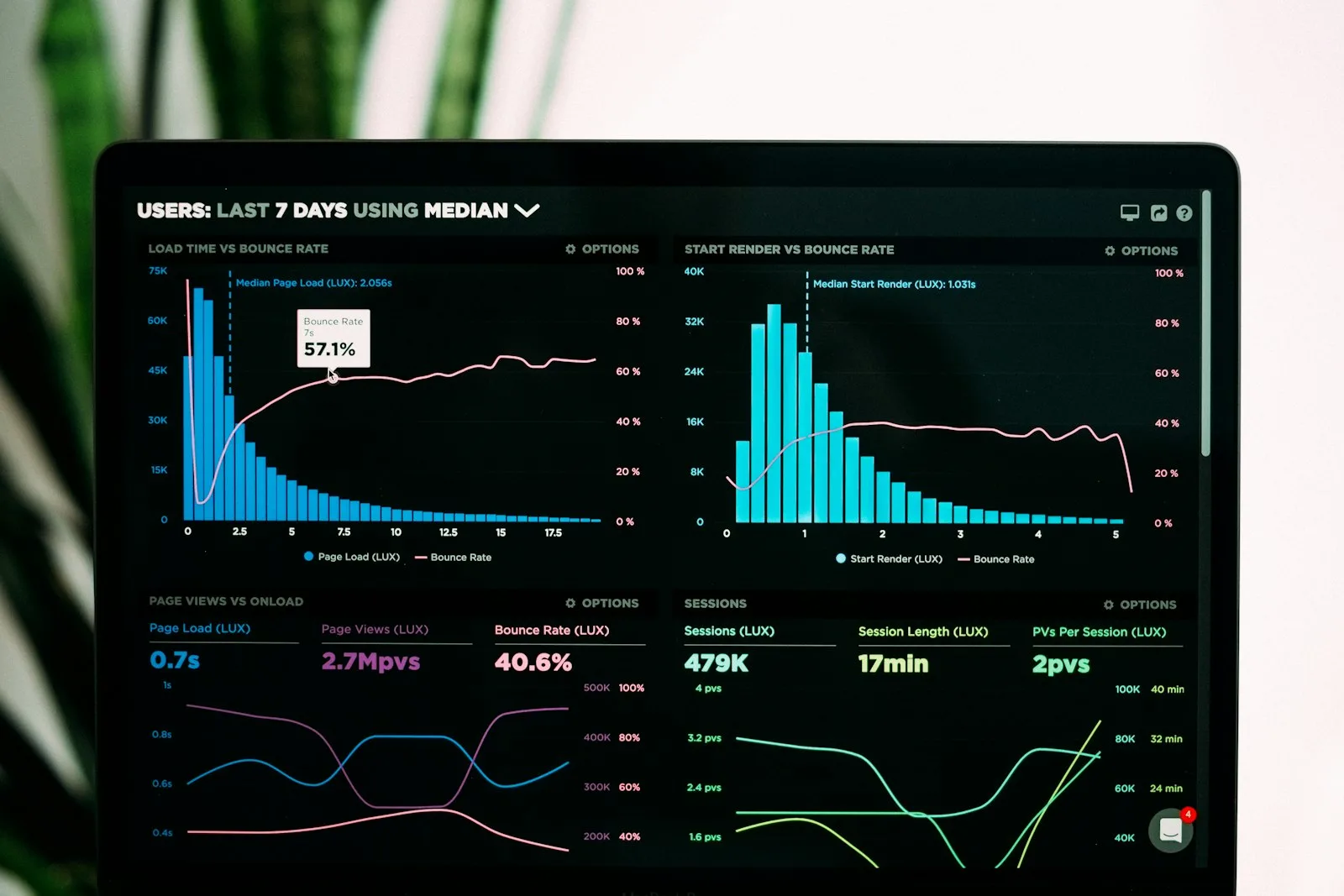
- Observation. After merge, telemetry and runtime metrics feed back, catching regressions that static reasoning missed.
The pull_request_review config many teams adopt formalizes the shift, making the human the accountable gate and the model the proposer:
# review-checklist.yaml
- check: tests_pass
  required: true
- check: security_scan_clean
  required: true
- check: edge_cases_covered
  required: true
- check: generated_code_explained
  prompt: "Summarize non-obvious logic for reviewers"
Teams that have adopted this rhythm report that the bottleneck has moved. The limiting resource is no longer typing speed; it is clarity of intent and the discipline of review.
What Rules and Conventions Matter More
Because the model learns from the repository it sits inside, the quality of an AI assisted team's output tracks the quality of its conventions. Documentation, naming, and consistency become leveraged assets. A codebase with clear module boundaries and enforced standards produces dramatically better AI suggestions than a tangled one. This has quietly turned maintenance—long treated as a necessary evil—into a strategic investment.
Teams are also realizing that code review must change to keep up. It is no longer enough to read a diff line by line; reviewers increasingly need to check the shape of the whole change, the tests that accompany it, and the assumptions embedded in it. In response, many engineering organizations have formalized review checklists that force attention to the places where AI output is weakest:
- Edge cases. Models excel at the common path but can silently skip unusual inputs—reviewers look for those gaps.
- Security. Generated code may include unsafe patterns involving inputs, credentials, or permissions.
- Integration. A change that works in isolation may break contracts with other services or data flows.
- Maintainability. Clever but obscure generated code can become a liability; clarity still wins.
"The job postings that matter now are not for people who can type code fastest. They are for engineers who can describe a system precisely, judge a design critically, and notice when a model has produced something subtly wrong. Those are old skills with new urgency." — an engineering director at a large SaaS company.
What This Means for Developers
The most common worry is straightforward: does AI make developers less valuable? The evidence so far points to a more nuanced conclusion. Developers are not being automated out of existence; they are being repriced around judgment rather than output volume. The strongest engineers remain scarce because they set direction, make trade-offs, and catch the mistakes that models make with total confidence. At the same time, the floor is rising: tasks that used to require deep framework knowledge can now be completed by someone who delegates well to a capable model. That squeezes the middle of the market.
For individual developers, the practical advice is consistent across surveys and hiring managers. Build the skills that complement the tools rather than compete with them:
- Deepen systems thinking. Understanding architecture, data flow, and failure modes is more valuable than memorizing API signatures.
- Sharpen prompt and evaluation craft. Knowing how to specify intent, and how to verify results, is the new core competency.
- Invest in review skill. The ability to find subtle defects in generated code is a differentiator.
- Specialize. Deep domain knowledge—finance, biotech, graphics, security—gives the human a durable edge over a generalist model.

The Hard Questions Getting Harder
Not everything about the future is bright. Several structural problems are becoming more visible as AI takes a larger share of the work. Security is the most acute: every developer is now effectively a reviewer of machine-generated code, and the volume of code being written means subtle vulnerabilities multiply. Intellectual property and licensing questions around training data remain unresolved in many jurisdictions, keeping legal teams busy. And there is a worrying skills question: if junior developers delegate too much too early, the pipeline that produces senior talent—years of fighting through hard bugs and messy systems—may quietly erode.
Maintaining the "learning by struggle" path is one of the least discussed but most important challenges of the AI-assisted era. Several studios have started carving out practice tasks, reviews, and debugging exercises that developers must do without the model, precisely to preserve the depth of experience that only hard-won repetition builds.
The Co-development Era
Stepping back, the realistic picture is neither utopia nor obsolescence. Software development is becoming a co-development practice in which humans and models divide labor by comparative advantage—models handle volume, recall, and mechanical transformation, while humans provide direction, judgment, accountability, and creativity. The tooling is still maturing, pricing models are still shifting, and the sociological side effects are only beginning to show.
What is clear is that the job description for "software developer" is being rewritten in front of us. The best developers of the next decade will not be the ones who can type the most code unaided. They will be the ones who can articulate what the system should do, orchestrate the tools and people who build it, and stand behind the result with actual responsibility. That is a harder and more interesting profession, not an easier one.