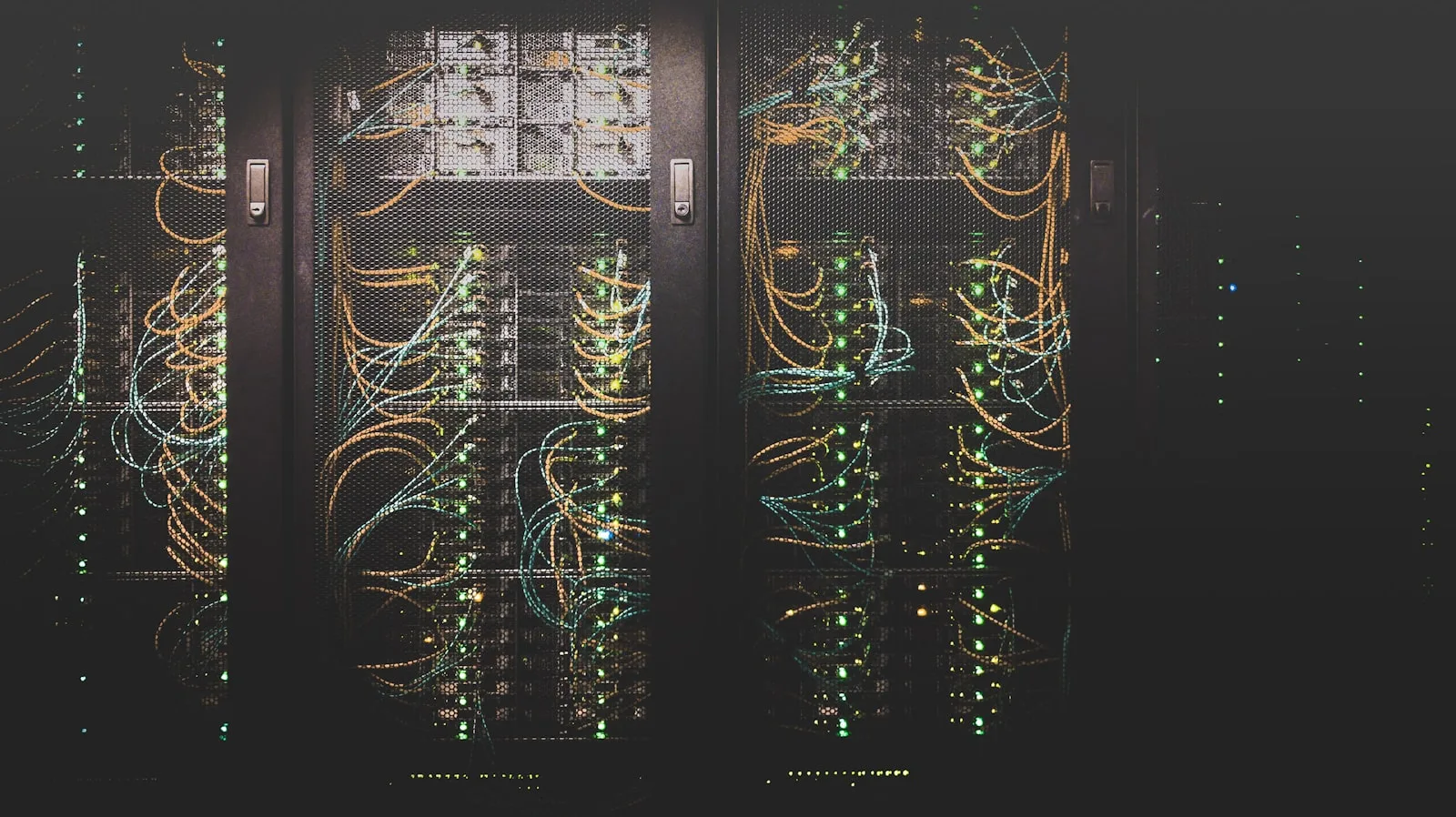
The Chip Crunch Behind the Boom
Every headline about a record-breaking model, a new frontier lab, or a trillion-dollar valuation rests, invisibly, on a much less glamorous fact: who can get their hands on enough advanced chips and enough power to run them. The AI boom is, underneath all the software, a story about hardware. And in 2026 that hardware is scarcer, stranger, and more strategically freighted than at any time since the dawn of the internet. Understanding the chip crunch means understanding who can train tomorrow's models, what it costs, and why the answer is reshaping competition, trade, and even the physical landscape of power grids.
Why GPUs Became the New Oil
The neural networks that power modern AI are, at bottom, huge exercises in linear algebra—multiplying vast matrices millions of times. Graphics processing units (GPUs), built to render game pixels in parallel, turned out to be spectacularly good at this math, and the industry converged on them. But the demand curve exploded. Training a frontier model used to be measured in modest budgets; today the largest runs burn compute measured in exa-flops that would have funded a small country not long ago, and every major lab wants more.
The crunch is not really one shortage but several overlapping ones:
- Manufacturing. Cutting-edge accelerators depend on the world's most advanced foundries, of which there are only a handful, and their output is both finite and politically sensitive.
- Packaging and memory. Even when chips are produced, advanced packaging, high-bandwidth memory, and interconnect supply can become bottlenecks that delay whole shipments.
- Power. Running thousands of accelerators at full tilt demands electricity and cooling at a scale that utility companies struggle to deliver on any near-term schedule.
- Facilities. Massive datacenters require years of permitting and construction, so supply cannot snap to match demand no matter how high prices climb.

Who Controls the Bottleneck
The shape of the crunch tracks the shape of the supply chain, which is remarkably concentrated. A single dominant accelerator designer sets the pace for the highest-end training silicon, and a tiny number of foundry partners can actually manufacture it. The second and third tiers—by older nodes, more constrained memory, or from a Chinese ecosystem racing to substitute domestic parts—serve the long tail of inference and smaller-scale training, but they do not yet displace the high end for the biggest frontier runs.
This concentration has turned accelerator allocation into a strategic and often political affair:
- Cloud providers sign multi-billion-dollar deals years in advance just to secure capacity, and then ration it to customers with waitlists and quotas.
- Export controls have made advanced chips a flashpoint of trade policy, gating who can buy what and forcing sanctioned regions to pursue domestic alternatives.
- Governments are increasingly purchasing compute as strategic reserves, treating supercomputer access the way an earlier generation treated oil stockpiles.
The practical consequence for most organizations is a frustrating two-speed world. Enterprises can almost always rent some capacity, but queueing, price volatility, and reservation requirements have become ordinary parts of AI procurement. Startups increasingly make decisions about architecture and training strategy based on what compute they can actually get, not just what they would ideally use.
"When someone asks me what the next breakthrough model needs, the answer is rarely a cleverer algorithm. It is three things: enough silicon, enough power, and enough patience to wait for both." — a datacenter capacity planner quoted at an industry conference.
Energy Is Becoming the Binding Constraint
As chip supply slowly improves, attention is shifting to what is actually harder to build: power. A single large training cluster can draw as much electricity as a midsize town, and the industry's appetite grows with every generation. Utilities warn of multi-year waits to connect new datacenters to the grid in several regions, and energy cost is now a first-order line item in AI economics, not an afterthought.
This is driving an unusual convergence of AI and energy strategy, often captured in capacity plans that treat megawatts as a first-class resource alongside FLOPs:
# capacity-plan.toml
[cluster]
gpus   = 8192
power  = "24 MW"
cooling = "direct-liquid"

[schedule]
train_windows = ["00:00-06:00", "20:00-24:00"]
inference     = "priority over training"
reserve       = "5% for red-teaming"
- Newbuild power. Tech firms are increasingly partnering on, or directly backing, new nuclear, natural gas, and large-scale renewable projects to secure dedicated supply.
- Energy-proportional compute. Teams are rethinking training schedules, inference batching, and cooling to squeeze more useful work from each megawatt.
- Location strategy. Where a model trains is increasingly decided by where power is available and cheap, sometimes rebalancing activity away from traditional hubs.
- Efficiency as defense. Firms that can train competitively with less power and less silicon gain strategic room that others simply do not have.

Alternatives and Escape Routes
The concentration at the high end has spurred a search for alternatives, and 2026 has seen meaningful progress on several fronts. Dedicated accelerators designed expressly for transformer math are maturing, offering efficiency gains over general-purpose GPUs for both training and inference. Custom silicon from hyperscalers is absorbing a growing share of internal workloads, and inference is being spread across far less exotic hardware through aggressive quantization and model compression. Meanwhile, the open-weight community's emphasis on efficiency has produced models that deliver large shares of frontier capability at a small fraction of the compute—a direct challenge to the "bigger is always better" orthodoxy.
These alternatives matter because they widen the set of actors who can participate:
- Inference on modest hardware lets smaller companies and even individuals run capable models locally, cutting both cost and dependency.
- Frugal training opens frontier-adjacent research to labs without bottomless budgets.
- Diversified supply reduces the systemic risk of a single point of failure in the chip chain.
What Comes Next
The near-term outlook is for continued, deep tightness rather than a sudden flood. Chip output will rise, but so will demand, and power will remain the harder ceiling. Expect to keep seeing multi-year cloud commitments, contested export rules, dedicated energy deals, and datacenter construction racing the forecasted need. Speculation about the timing of the next generation, and whether it can be made frugal enough to escape the crunch, will shape market sentiment.
At its root, the chip crunch is a collision between exponential demand and stubbornly physical constraints. It has already decided which organizations can chase the frontier and which must settle for adapting someone else's breakthrough. It has made energy policy into AI policy, and supply chains into strategy. The models grab the headlines, but the cards are dealt in foundries, power grids, and negotiating rooms thousands of miles from any datacenter. Whoever controls those scarce, physical keys will continue to shape what AI can become—and who gets to build it.